
# 18 The Difference Between Self-Care and Self-Trust (And Why It Matters)
The most important relationship in your life is the relationship you have with yourself. Because no matter what happens, you will always be with yourself.
- Diane von Furstenberg
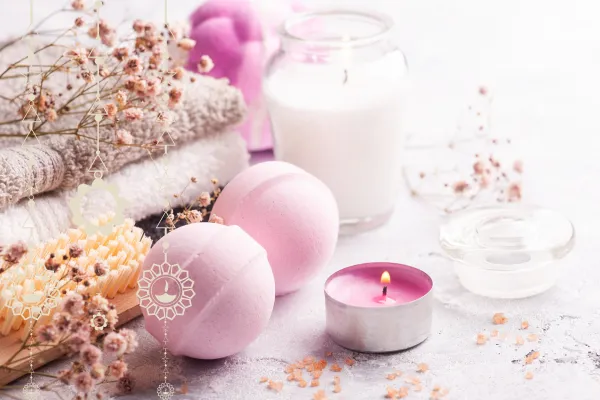
For many years I had this image of self-care – candles, bath salts, massages, a movie on my own tucked under a blanket. And as much as those things are beautiful, and very needed at times, they didn't prevent the Monday morning dread, or the tiredness that never quite lifted – even after an hour of soaking in the bath, turning a lovely shade of lobster with wrinkly fingers to match.
The illusion that I was "taking care of myself" by giving myself these treats – after I'd hammered myself to a pulp achieving things for everyone else around me – started to crack. Why didn't a long soak release my aching muscles? Why did I step out of a movie and straight back into being an actor in a life that someone else was Directing? And surely relying on three coffees to get through a morning wasn't the intended outcome of this so-called self-care I was practising?
Something wasn't adding up.
Here's what the wellness industry figured out a long time ago – self-care sells better as a product than as a practice. So that's what it became. Something to consume rather than something to embody. And in doing so, it handed us yet another thing to get right, another standard to measure ourselves against, another way to feel like we're falling short. And somewhere along the way, I bought into it too. Literally.
That $48 candle that smelled like "clarity and intention" sat in my bathroom cabinet collecting dust and quietly judging me every time I opened the door.
The irony is that all this self-care pressure is actually making us feel worse.
We fall back into the same trap – outsourcing our power, looking for something out there to fix what's happening in here. And as long as we're doing that, we're still the victim of our own circumstances. Still waiting to be rescued. Still handing our authority over to a product, a routine, a perfectly curated wellness aesthetic.
The bubble bath isn't the problem. The problem is believing it's enough.
Real self-care was never meant to be something you consume. It was meant to be a practice of radical self-honouring – a genuine reckoning with what you actually need, not what's easiest to reach for. That is an important distinction in this conversation.
Are we simply self-soothing? Because self-soothing manages the symptoms, whereas real self-care gets down to the source – it’s peeling back the layers to address what we are actually masking. Both have value – there is nothing wrong with binge-watching Nobody Wants This on Netflix (guilty!) – but deep, authentic self-care is the one that creates lasting change.
Our protector parts reach for comfort because they were programmed to do exactly that – to protect us, to keep us safe. They may be protecting us from humiliation, like that time in Grade 5 when we were laughed at, or from abandonment, like that time we were two years old, crying for Mum, and she couldn't come because she was cooking dinner for the family. During those moments we made meaning about what that said about us as a person, and our protector parts developed strategies to make sure we never had to feel that way again. But in doing so, we exiled not only the memories of those events, but the feelings attached to them – and those feelings got trapped in the body without ever having the opportunity to be fully expressed and released.
This is where self-soothing comes in. We want to feel better, so we look for ways outside of ourselves to make that happen. For me, that looked like numbing my feelings, ignoring my gut no, staying relentlessly busy, and mind-numbing scrolling. These kept me safe in the sense that I never had to look underneath what was actually going on inside myself. I could easily justify that staying busy meant I was being productive and achieving – whatever the fuck I was apparently achieving at the time. Not acknowledging how I really felt was working a treat – I just got on with it, meanwhile progressively disconnecting from myself. You get the picture.
Genuine self-care, I eventually learned, looked nothing like I expected. It looked like sitting with the discomfort instead of reaching for my phone. It looked like saying no to something I'd already said yes to. It looked like crying in the car instead of pushing through. Far less Instagram-worthy, and far more confronting than I anticipated – and this is where I learned that leaning into the resistance is where the gold is. Standing on the precipice of transformation is simultaneously terrifying and liberating.
When we start to listen to what our body is actually telling us – whoa, this is embodiment. Our nervous system is key here because it is our inner compass. It knows well before our mind has even had a chance to comprehend the situation. So why did we stop listening? To this inner truth, to our innate wisdom?
I keep asking myself how and when I stopped listening – and the answer is always the same. I was conditioned to believe that logic and working through the pros and cons was the responsible, rational thing to do. There is no fault in any of this – the external environment has been programming us to think and behave this way for a very long time.
And so when you become aware – then you have choice.
When our nervous system is chronically dysregulated – and let's be honest for a moment, that seems to be our most common state – we lose our ability to distinguish between what we want and what we actually need. Because there is a difference. I want many things in my life, but it's the things I truly need that make all the difference when I require genuine support.
Listening to our body, our inner compass, and our inner authority – depending on your Human Design, is simple … but in the beginning not easy. It takes practice. But once you tune in and learn how this feels for you – well – you can't unknow it. It's like riding a bike. It takes practice to find your balance, to stop wobbling all over the shop and eventually let go of the training wheels – but once you know, you know.
And then you can start listening to those physical cues as genuine information rather than inconvenience. Which, if I'm honest, is exactly how I used to treat my gut every time it gave me a visceral yes or no. Inconvenient. Irrational. Easy to override. Until it wasn't so easy anymore.
Your body is your subconscious mind and you can’t heal it by talk alone.
— Candace Pert
If you're ready to start tuning in, I've created a free meditation and reflection guide that includes a simple one-minute nervous system check-in – a gentle starting point for coming back to yourself. You can access it here.
The way I see it, self-trust is the ultimate act of self-care. When we truly trust ourselves, we can honour our authentic needs even when doing so disappoints others. This is huge – so let's marinate on this for a moment. Honouring our own needs even when others may be disappointed or uncomfortable. Pause. Breathe. It can feel genuinely confronting.
I've noticed for myself that when I set boundaries from a place of self-respect rather than fear or resentment, my outer world reorganises around me. The Law of Correspondence at play – so within, so without. When we have true love for ourselves and honour that, it permeates into our outer environment. People start treating you the way you treat yourself. That's not a spiritual concept – that's something you'll actually witness happening in your life.
This flows into our decision-making too. When we make decisions from embodiment and aligned values rather than from anxiety, the synchronicities and manifestations that once felt out of reach simply begin to unfold. Because you stop outsourcing your knowing. You come back to yourself as the source.
So what does this actually look like on a Tuesday afternoon? It looks like pausing before automatically saying yes and checking in with your body first. It looks like leaving something that looks fine on paper but feels wrong in your bones. It looks like choosing rest without a justification, because your body said so and that was enough. It looks like finally having the conversation you've been avoiding for months because your integrity quietly demanded it. None of it is glamorous. All of it is self-trust in action.
I've noticed in my own journey that true transformation requires working with what's real, not what's comfortable. The lead doesn't become gold in a bubble bath – it transforms through honest self-examination. In Kabbalah, this is the principle of working with what is actually true rather than what we wish were true. Reality, however uncomfortable, is always the starting point for genuine change.
The wellness rituals are lovely – I genuinely love sitting with my cacao, candles, and oracle cards – but authentic self-care is a spiritual practice that invites us to go deeper than that. It asks us to look at what we've been avoiding, to feel what we've been numbing, and to meet ourselves there with honesty rather than judgment.
We have been conditioned to believe we are not powerful, that we need to reach for something outside of ourselves to feel whole or worthy. That is a lie. You are so much more than what you have been told to believe. And it all comes back to your relationship with yourself – because that is where everything is either built or dismantled.
So let me ask you this – what is one thing your body has been asking for that you've been substituting with something easier? No judgment, no shame, no guilt. Just get radically honest with yourself and ask it the way you would ask your best friend. Gently. Curiously. With genuine care.
Because self-trust is the foundation of everything. Not the crystals, not the routine, not the next course or the next chapter. You. Coming back to you. That's where it all begins.
The privilege of a lifetime is to become who you truly are.
- Carl Jung
Check out the YouTube Video on this topic here.